

 English
 French
 Spanish
 Russian
 Korean
 Japanese
Food Freshness Indicator Packaging with Natural Coloring
In the global food trade landscape, the compliance path for every ingredient is like a precision navigation map—any slight deviation could cause products to “run aground.” As a widely used natural colorant, the regulatory environment for annatto resin is both complex and dynamic. Green Spring Technology charts this precise global compliance map for you, ensuring your products stay on a safe and efficient course when expanding into international markets.
I. Core Market Regulatory Coordinates: Positioning Three Key Regions
Understanding the “rules of the game” in major markets is the first step toward compliance.
1. European Union (EU) - A Model of Stringent Systems
· Regulatory Index: Primarily governed by (EC) No 1333/2008 (Food Additives Regulation) and its Annex II, identified as E160c in the regulation.
· Key Reference:
· Usage Scope: Explicitly permitted for specific food categories like meat products, sauces, cheese rinds, etc., with strict maximum usage limits per category.
· Purity Standards: Must comply with stringent specifications in (EU) No 231/2012, including limits on primary pigment content, capsaicin residues, and solvent residues.
· Labeling Requirements: Must be declared as “Capsicum Red” or ‘E160c’ in ingredient lists.
2. United States (USA) - Safety Assessment-Based System
· Regulatory Index: Capsicum oil resin is recognized as “Generally Recognized as Safe” (GRAS) by the U.S. Food and Drug Administration (FDA).
· Key Reference:
· Usage Principle: Follows the “Good Manufacturing Practice (GMP)” principle, meaning it should be used at the lowest reasonable dosage to achieve the desired technical effect. There is no fixed upper limit, but safety must be ensured.
· Organic Products: If used in organic foods, its production and processing must comply with the USDA National Organic Program (NOP) standards, which impose strict requirements on permitted solvents and processes.
· Labeling Claims: Typically labeled as “chili extract (coloring)” or “natural colorant.”
II. Key Differentiated Market Requirements at a Glance
Beyond the three core markets, other significant regions have unique requirements:
· Japan: Adheres to the “Positive List System.” As an existing additive, chili red must meet its specified standards.
· Middle East: Halal certification is fundamental, requiring assurance that no prohibited ingredients are present throughout the entire process from raw materials to production, certified by authoritative bodies.
· ASEAN (Association of Southeast Asian Nations): Food standards are gradually being harmonized, but attention must still be paid to localized regulatory differences among member countries (e.g., Indonesia, Malaysia, Thailand).
Part One: Clean Label Practices: Optimizing Ingredient Declarations While Ensuring Compliance
In an era where “clean label” has become a top priority for global consumers, compliance is merely the baseline. The true key to brand success lies in transforming ingredient lists into powerful marketing tools. For chili oil resin, scientifically designing ingredient declarations is an art that balances rigid regulatory requirements with consumers' flexible perceptions.
I. Ingredient Declaration Strategy: From “Compliance Descriptions” to “Communication Language”
Different phrasing triggers vastly different associations in consumers' minds. Our core strategy: employ consumer-friendly, regulatory-compliant language that conveys positive product value.
1. Preferred Labeling Solutions (Recommended)
These formulations achieve optimal balance across compliance, clarity, and consumer acceptance:
· “Paprika Color” (Paprika Colour)
· Advantages: Globally most recognized and accepted term—direct, natural, unambiguous. Complies with China (GB 2760), EU (E160c alias) and other regions. It represents the lowest-risk, highest-acceptance preferred option.
· “Natural Color (Paprika)”
· Advantages: Emphasizes the ‘natural’ attribute, precisely aligns with clean label trends, and effectively enhances consumer favorability. Highly attractive in markets permitting “natural” claims (subject to meeting relevant standards).
· “Paprika Extract”
· Advantages: A milder, more professional phrasing that implies its extract nature, avoiding potential consumer sensitivity to the term “colorant.” Preferred by many premium and organic brands.
2. Options Requiring Careful Use
In certain contexts, while compliant, these may have neutral or negative impacts on consumer communication:
· “Paprika Oleoresin”
· Analysis: This is the most chemically/industrially accurate term. While fully compliant, the words ‘oleoresin’ or “resin” may confuse some consumers or evoke associations with chemical products. Use with caution on consumer-facing product labels; more suitable for technical documentation.
· “E160c” (E-number)
· Analysis: EU standard code, legally compliant. However, despite the scientific nature of the E-number system, certain consumer groups hold negative perceptions, associating it with ‘artificial’ or “additives.” Avoid in clean label products unless the target market views it very neutrally.
· Functional Descriptions (e.g., “used for coloring”)
· Analysis: Mandatory or standard in certain markets. While functional descriptions are necessary, comparative statements like “artificial synthetic color substitute” may backfire by implying the product originally required artificial colors.
Core Principle: Prioritize expressions that clearly and naturally combine the ingredient source (chili) with its function (color/extract).
II. Adaptation Guidelines for Special Certifications and Claim Systems
When products require additional value propositions, claims for capsicum resin must comply with stricter frameworks.
1. Organic Certification (e.g., EU Organic / USDA Organic)
· Core Requirements: Not only must the raw material itself potentially come from organic cultivation (depending on certification standards), but processing aids (especially extraction solvents) must be on the permitted use list, and the processing must comply with organic standards.
· Claim Essentials: Certified products may display “Organic” before the ingredient name (e.g., “Organic Chili Extract”). Green Spring Technology's organic-certified product line includes complete certification chain documentation (e.g., organic certificates, trade certificates), providing reliable assurance for organic claims.
2. Religious Certifications (Halal / Kosher)
· Core Requirements: Ensure no prohibited substances (e.g., alcohol, certain animal-derived ingredients) are present from raw materials (chili peppers) through extraction and production, with no risk of cross-contamination in processing equipment.
· Declaration Key Points: Upon certification by authoritative bodies, corresponding Halal or Kosher logos may be used. Green Spring Technology's certified products directly support your compliance declarations.

3. Non-GMO Declaration
· Core Requirements: Establish traceability from seed to finished product, and demonstrate absence of GMOs through testing or process certification.
· Declaration Key Points: Overall non-GMO claims are permissible only when all ingredients meet non-GMO standards. We provide relevant non-GMO documentation as part of your supply chain declaration support.
III. Practical Techniques for Enhancing Clean Label Scores
Beyond product names, overall formulation design significantly impacts a label's “clean” perception:
· Streamline Formulations: Minimize additives with single functions to highlight core ingredients.
· Functional Synergies: Leverage capsicum resin's dual role in coloring and (subtle) flavoring to maximize its multifunctional value in formulations.
· Process optimization: Select cleaner extraction methods (e.g., supercritical CO₂ extraction) and document them in technical files to provide scientific backing for “natural” and “clean” claims.
By strategically selecting ingredient declarations and aligning with relevant certifications, chili oil resin can evolve from a simple functional ingredient into a powerful vehicle for conveying natural, pure, and trustworthy brand values.
Part Three: Compliance Application Navigation: Cross-Market Practical Guide
Successful global application of capsicum resin requires not only understanding fundamental principles but also mastering specific compliance pathways across markets and product categories. This section provides a cross-market practical framework and tools to help your team efficiently achieve compliance objectives.
I. Multi-Market Application Compliance Framework
Key compliance differences exist across markets for capsicum resin applications. Core compliance points for major markets are as follows:
1. North American Market (US/Canada)
· Compliance Foundation: Adherence to FDA's GRAS (Generally Recognized as Safe) principle
· Key Requirements: Products must meet Food Chemical Codex (FCC) specifications; organic products require USDA organic certification
· Application Recommendations: Labeling should state “Paprika Extract” or “Natural Color (Paprika)”
2. European Union Market
· Compliance Basis: Strict adherence to Regulation (EU) No 1333/2008
· Key Requirements: Must be labeled as E160c or “Color: Paprika Extract,” with usage not exceeding category-specific limits
· Certification Requirements: Organic products require EU Organic certification
3. Asian Market (Key Regions)
· China: Strictly comply with GB 2760 standard; must be labeled as “Chili Red”
· Japan: Follow the Positive List system; must meet specific purity standards
· Southeast Asia: Most countries recognize CODEX standards, but note variations in national implementation
II. Product Category Compliance Strategy Matrix
Product Category | Core Compliance Challenges | North American | EU | Asia |
Meat Products
| Usage Limits, Labeling Declarations | Application of GMP Principles | Strict adherence to E160c usage tables | Precise calculation of maximum usage levels |
Baked Goods | Thermal Stability, Light Exposure Effects | Optimization of Natural Colorant Declarations | Selection of heat-resistant E160c variants | Compliance with high-temperature processing standards |
Sauces & Condiments
| pH Stability, Dispersibility | Acid-Stable Formulation Design | Composite Seasoning Category Confirmation | Accurate Sauce Classification |
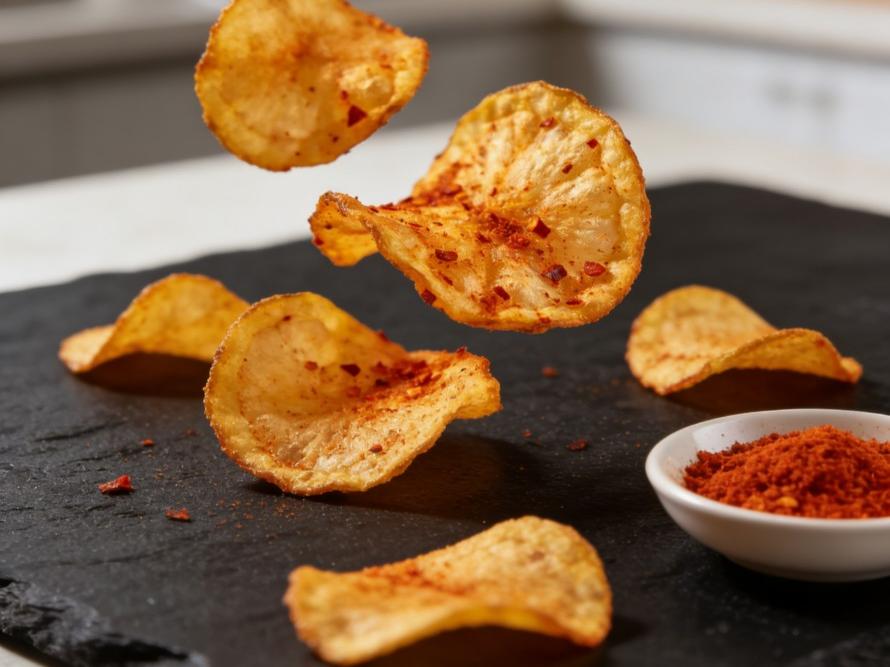
Snack Products | Shelf-Life Stability | Shelf-Life Testing Validation | Light Stability Data Support | Packaging Material Compatibility |
III. Compliance Risk Management Tools
1. Four-Step Risk Assessment Framework
· Step 1: Identify and interpret target market regulations
· Step 2: Accurately classify products and calculate usage amounts
· Step 3: Verify compliance of label declarations
· Step 4: Audit supply chain documentation completeness
2. Compliance Documentation Checklist
Each product batch must include:
· Certificates of Analysis meeting target market specifications
· Third-party certification documents (e.g., organic, Halal, Kosher)
· Supply chain traceability documentation
· Regulatory compliance declaration
Part III: Green Spring Technology Professional Support & Compliance Outlook
I. Professional Compliance Support
· Regulatory consulting services: Provide global market access guidance and document review
· Certification coordination services: Assist in obtaining specialized certifications (organic, Halal, Kosher, etc.)
· Compliance Documentation Package: Complete technical files (COA, TDS, Declaration of Conformity) included with each shipment
II. Key Trend Alerts
· EU: Enhanced E-number labeling requirements anticipated in 2024
· USA: FDA to update natural colorant definition guidelines
· Global: Ongoing clean label standards upgrades and stricter non-GMO requirements
III. Ongoing Support Services
· Free Resources: Provide the “Global Capsaicin Red Compliance Quick Reference Guide”
· Customized Consulting: Design compliance solutions tailored to specific markets
· Supply Chain Audits: Assist in establishing traceable, compliant supply chain systems
Contact Information
+86 13649243917 (International Regulatory Consultation Hotline)
helen@greenspringbio.com
GreenSpring Technology - Your Global Compliance Partner
-
Prev
Study on Natural and Synthetic Food Colours
-
Next
How Does Green Spring Technology Ensure Consistent Color in Paprika Oleoresin?